By Marcello Cherchi, MD PhD
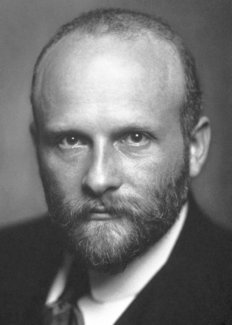
Dr. Robert Bárány (Vienna 1876 – Uppsala 1936) earned his medical degree from the University of Vienna in 1900 (Gore and Pai-Dhungat 2015), after which he studied internal medicine, neurology and psychiatry (Bracha and Tan 2015). He was awarded the Nobel Prize for Physiology and Medicine in 1914 for his study of the vestibular system (Bracha and Tan 2015; Lopez and Blanke 2014), but could not collect it because at the time he was being held as a prisoner of war by the Russians (Bracha and Tan 2015; Maranhao-Filho and Barany 2019); the Russians eventually released him in 1916 (Gore and Pai-Dhungat 2015).
Bárány made many contributions to medicine. His observations (Bárány 1907) led to development of the caloric irrigation method for stimulating the peripheral vestibular system. When this was subsequently coupled with technology for measuring eye movements, it served as the first quantitative method for evaluating the vestibular function of the horizontal semicircular canal.
References
Bárány R (1907) Physiologie und Pathologie (funktions-prüfung) des Bogengang-apparates beim Menschen: klinische Studien [Physiology and pathology (functional testing) of the semicircular canal apparatus in humans: clinical studies]. Franz Deuticke, Leipzig and Vienna
Bracha A, Tan SY (2015) Robert Barany (1876-1936): the Nobel Prize-winning prisoner of war. Singapore Med J 56: 5-6. doi: 10.11622/smedj.2015002
Gore G, Pai-Dhungat JV (2015) Robert Barany Father of Otoneurology and Vestibular Functions. J Assoc Physicians India 63: 99.
Lopez C, Blanke O (2014) Nobel Prize centenary: Robert Barany and the vestibular system. Curr Biol 24: R1026-8. doi: 10.1016/j.cub.2014.09.067
Maranhao-Filho P, Barany A (2019) Robert Barany, a scientist with many interests. Arq Neuropsiquiatr 77: 366-368. doi: 10.1590/0004-282X20190034
