By Marcello Cherchi, MD PhD
In 2017 Gans, Kurtzer and McLeod described a maneuver for treating lateral canal BPPV of either side (Gans et al. 2017), now known as the Kurtzer hybrid maneuver. They state that, “The KHM [Kurtz hybrid maneuver] consists of Appiani/Casani/Gufoni maneuvers combined into one fluid treatment” (Gans et al. 2017). This maneuver has not received much scrutiny in the literature.
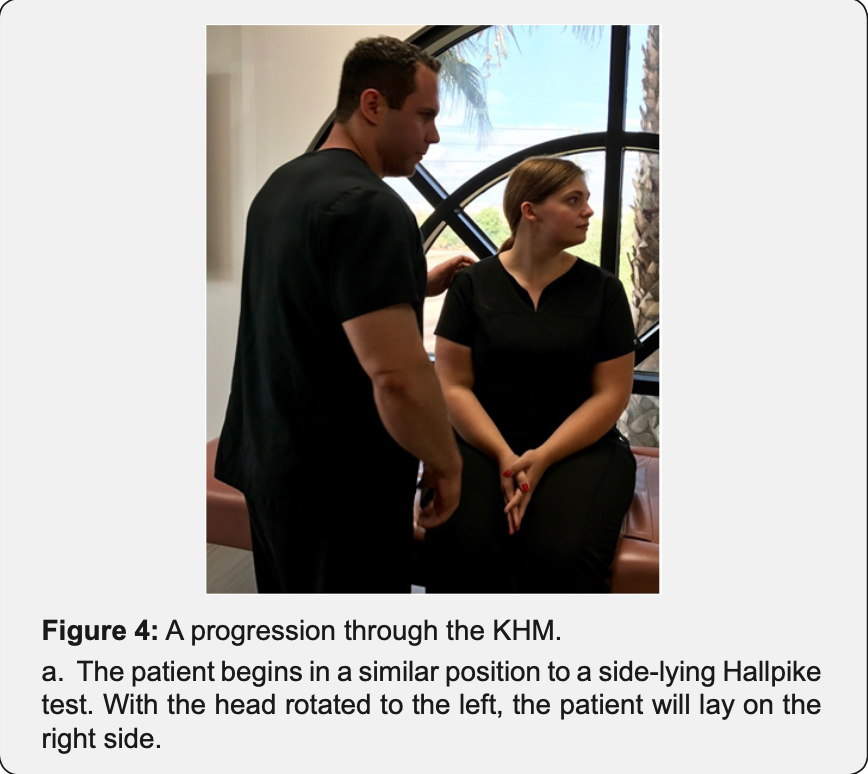
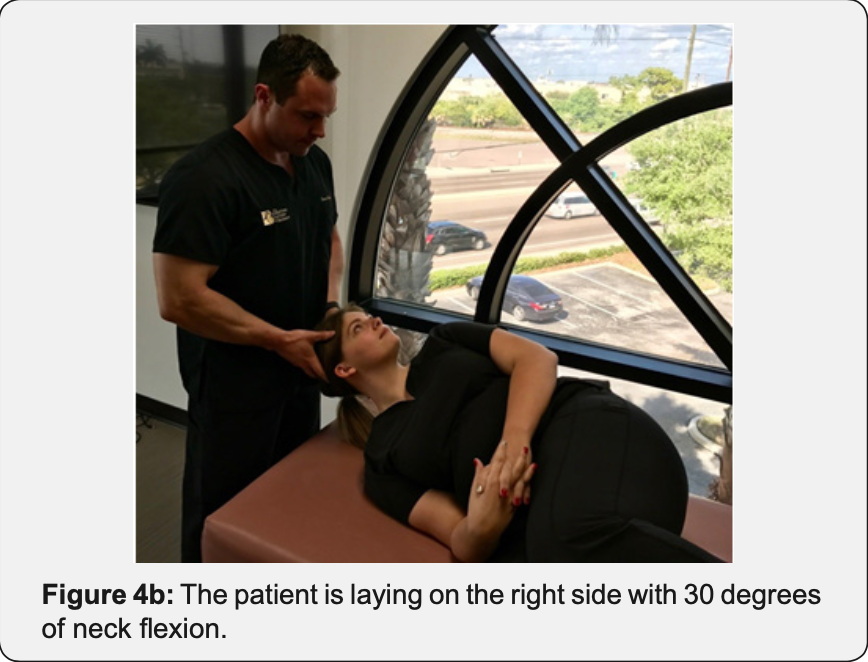
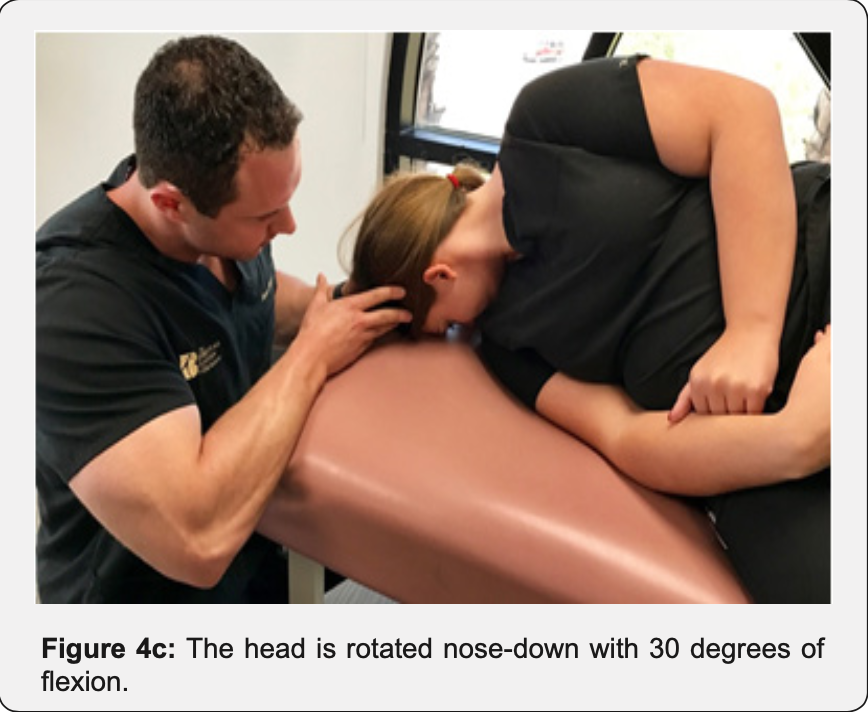
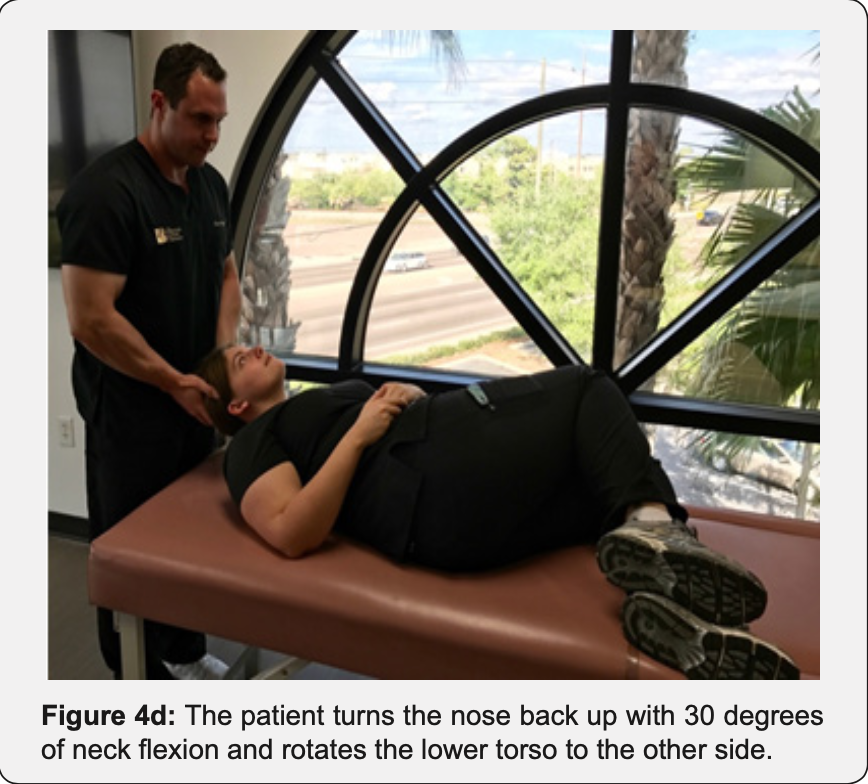
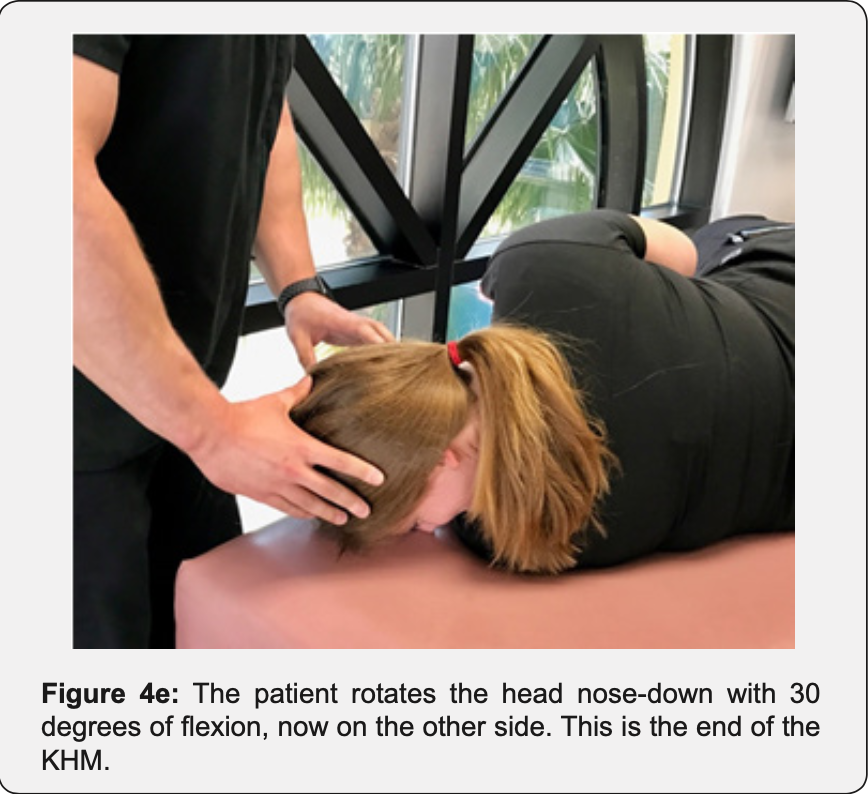
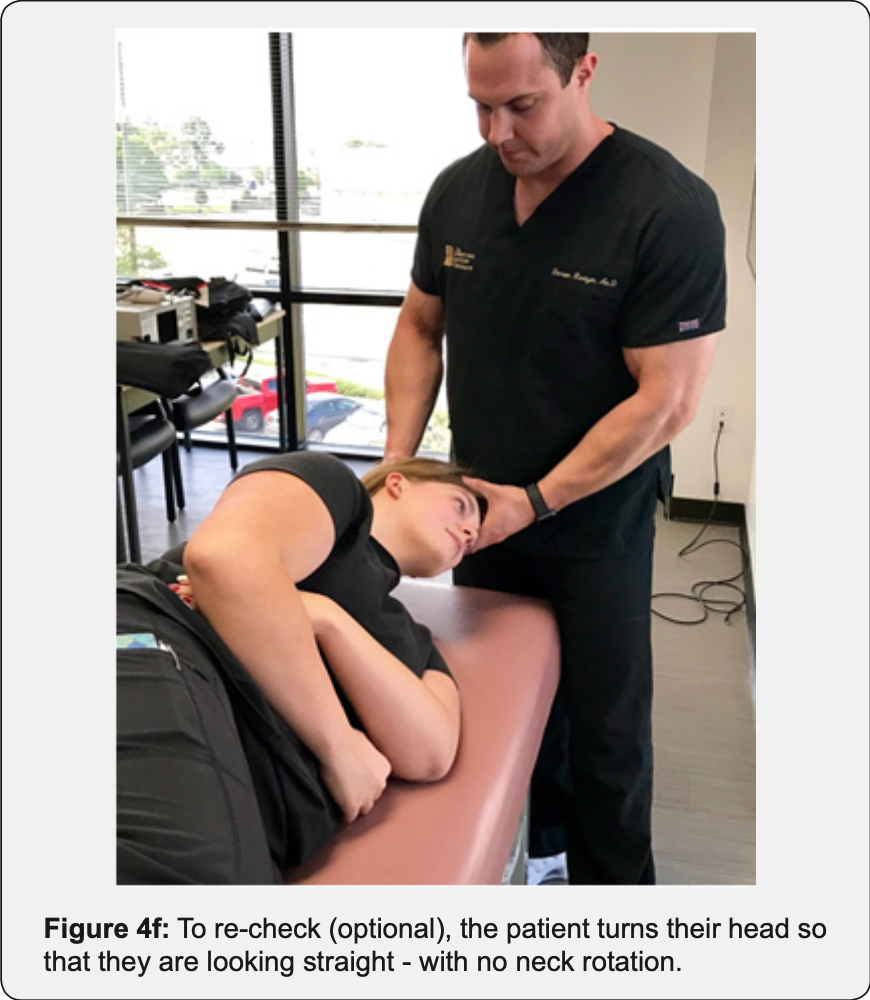
The series of Figures below, from Ganz and colleagues (Gans et al. 2017), illustrates the Kurtzer hybrid maneuver.
 |
 |
 |
 |
 |
 |
The description of the Kurtzer hybrid maneuver for treating lateral canal BPPV when the side is unknown, or when it is bilateral, is as follows, adapted from (Gans et al. 2017).
- The patient begins in a seated neutral position, turns the head 90 degrees toward the patient’s left shoulder
- The patient lies down on the right side (such that the patient’s nose is pointed toward the ceiling), but with the head/neck flexed toward the left (now uppermost) shoulder by 30 degrees. This position should be maintained for 1 minute.
- The patient rotates the head 180 degrees toward the patient’s right (now undermost) shoulder, such that the nose is pointing toward the floor, but with the head/neck flexed toward the right (undermost) shoulder by 30 degrees. This position should be maintained for 1 minute.
- The patient rotates the head 180 degrees toward the patient’s left (still uppermost) shoulder with the head/neck flexed 30 degrees toward the patient’s left (still uppermost) shoulder, and rotates the torso 90 degrees toward the patient’s left such that the torso is supine, and maintains the head in this position. This position should be maintained for 1 minute.
- The patient rotates both the head and the torso toward the patient’s left by 90 degrees (such that the patient is lying on their left shoulder), and then continues to rotate the head another 90 degrees toward the patient’s left (now undermost) shoulder (such that the patient’s nose is pointing toward the ground), and then further flexes the head/neck by 30 degrees toward the left (now undermost) shoulder. This position should be maintained for 1 minute.
- The patient sits up and assumes a neutral position.
Since the Kurtzer hybrid maneuver treats both lateral canals, presumably it could also be executed in a mirror image to the sequence described above, with similar effects; the original article (Gans et al. 2017) does not state this, though the videos (links below) demonstrate the mirror image to the above figures and description.
Kurtzer hybrid maneuver, videos
- https://www.youtube.com/watch?v=3KDQ943RRzU (Dallas Ear Institute)
- https://www.youtube.com/watch?v=6cY5GIcp-as (Dallas Ear Institute)
The Kurtzer hybrid maneuver has been studied in a prospective trial without a control group (Gans et al. 2017).
References
Gans RE, Kurtzer D, McLeod H (2017) New Horizontal Canal Benign Paroxysmal Positional Vertigo Treatment: Kurtzer Hybrid Maneuver. Global Journal of Otolaryngology 6: 44-48. doi: 10.19080/GJO.2017.06.555686
