By Marcello Cherchi, MD PhD
For patients
Paget’s disease of bone (PDB) usually affects older people. In some cases it affects the bones of the skull and can cause hearing loss, tinnitus or disequilibrium. If your doctor suspects PDB, they may check a CT or MRI, as well as tests of hearing and balance. Treatment with medication (such as a bisphosphonate, which is a pill) is sometimes tried. In some cases an ENT surgeon may consider a surgery for the ear.
For clinicians
Overview
Paget’s disease of bone (PDB) is a disorder of bone metabolism in which abnormal osteoclast activity results in inappropriately accelerated remodeling of bone. PDB is the second most common bone disorder after osteoporosis, and tends to become symptomatic in older people. Around 66% – 70% of PDB patients have involvement of the temporal bone, which can cause sensorineural and/or conductive hearing loss that is usually bilateral and progressive; the mechanism of this hearing loss is incompletely understood. Disequilibrium can also occur. A diagnosis of PDB in general can be secured by plain films and nuclear radioscintigraphy; temporal bone involvement may be better characterized with CT and MRI. Medical treatment with bisphosphonates and calcitonin has had mixed results. In selected cases of hearing loss, surgical treatment with stapedectomy or cochlear implantation has been attempted.
Introduction
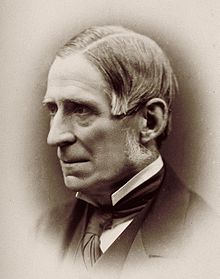
Sir James Paget (1814 – 1899) was an English surgeon and pathologist who published several cases of what he termed “osteitis deformans” (Paget 1877, 1882), currently termed Paget’s disease of bone (PDB).
Epidemiology
Epidemiologic studies estimate that in the United States the overall prevalence of PDB is 1% – 2%, with a peak in the range of 65 to 74 years at a rate of 2.32% ± 0.54% (Altman et al. 2000), making it the second most common bone disorder after osteoporosis (Ankrom and Shapiro 1998). There is a “slight male predominance in the 45- to 74-year age group” (Altman et al. 2000).
Of all patients affected by PDB, it has been reported that “two thirds” (Nager 1975) to 70% have involvement of the skull (Teufert and Linthicum 2005), and 30% have involvement specifically of the temporal bone (Proops, Bayley, Hawke 1985).
Since healthy people exhibit presbycusis, it is reasonable to wonder whether the hearing loss in PDB patients (which tends to afflict older individuals) is due simply to age. Studies that have explored this topic report that hearing loss in temporal bone PDB patients clearly exceeds what could be ascribed to age alone (Amilibia Cabeza et al. 2019; Baraka 1984; Deep et al. 2017).
Genetics
The etiology of adult-onset PDB is unknown.
Juvenile onset cases of PDB (OMIM 239000) have been linked to a homozygous or compound heterozygous mutation in the TNFRSF11B (tumor necrosis factor receptor superfamily, member 11B) gene (OMIM 602643) on chromosome 8q24.12, which results in a deficiency of osteoprotogerin.
Pathophysiological mechanism of disease
PDB is a disorder of bone metabolism involving inappropriately accelerated bone remodeling, which is thought to be attributable to dysfunctional osteoclasts, whose activity is normally inhibited by osteoprotogerin. PDB can manifest at a single site (monostotic) or multiple sites (polyostotic). Commonly affected bones include the skull, spine, pelvis and long bones in the legs.
Most cases of PDB are asymptomatic. Symptomatic cases generally result from bone overgrowth/deformation, or pathologic fracture.
Below we discuss that temporal bone involvement by PDB presents with audiologic and vestibular symptoms. The mechanisms by which PDB causes audiologic and vestibular dysfunction are incompletely understood (Bahmad and Merchant 2007; Khetarpal and Schuknecht 1990).
PDB involving the skull is well-documented to cause multiple compressive cranial neuropathies (Ankrom and Shapiro 1998; Bomfim Fde et al. 2013; Hamid et al. 2022). When this includes narrowing of the internal auditory canal it can compress the vestibulocochlear nerve (Applebaum and Clemis 1977; Ginsberg, Elster, Moody 1992). One could reasonably expect otoestibular symptoms secondary to such compressive neuropathy. Indeed, temporal bone studies have reported, “The histopathology reveals Pagetic bone invading the internal auditory canal and compressing the cochlear division of the VIIIth cranial nerve resulting in severe neural degeneration” (Applebaum and Clemis 1977), with corresponding sensorineural hearing loss.
However, compressive neuropathy does not appear to be the only mechanism underlying hearing loss. It has also been found that:
- PDB patients have decreased bone mineral density of the otic capsule (Amilibia et al. 2021; Bahmad and Merchant 2007; Monsell 2004; Monsell et al. 1995b).
- There are cases of PDB patients found with a fractured stapes footplate (Dimitriadis, Bamiou, Bibas 2012).
- Dimitriadis and colleagues stated that, “We hypothesize that sensorineural hearing loss in patients with PDB of the temporal bone may, in some cases, be attributed to obliteration of Cotugno’s canal by remodeling pagetoid bone, thus obstructing the venous drainage of the cochlea, with a subsequent effect on the function of stria vascularis and spiral ligament” (Dimitriadis, Bamiou, Bibas 2012).
- Khetarpal and Schuknecht speculate that, “the hearing losses in Paget’s disease are caused by changes in bone density, mass, and form that serve to dampen the finely tuned motion mechanics of the middle and inner ears” (Khetarpal and Schuknecht 1990).
- Some studies report that PDB patients have normal auditory brainstem evoked responses (Monsell et al. 1995a) and others report data reflecting integrity of the auditory component of the vestibulocochlear nerve, reaching conclusions such as, “Findings support the principle that hearing loss in Paget’s disease of bone is generally associated with intact auditory nerve function and also support a cochlear site of lesion” (Monsell et al. 1995a), and “Studies reviewed show no evidence of auditory nerve dysfunction and confirm a cochlear site of lesion. A loss of bone mineral density in the cochlear capsule is associated with both a high-tone hearing loss and a low-tone air-bone gap” (Monsell et al. 1999).
- Some studies report degenerative changes of the spiral ligament (Bahmad and Merchant 2007; Dimitriadis, Bamiou, Bibas 2012; Teufert and Linthicum 2005).
Bahmad and colleagues (Bahmad and Merchant 2007) summarized these findings as follows:
“The pathogenesis for the conductive and sensorineural hearing loss is not known. As illustrated in the present case, histopathologic studies have failed to find consistent correlates for the hearing loss. Clinical studies using audiometric and computed tomographic analysis have demonstrated a loss of otic capsule bone mineral density correlated with both the high-frequency sensorineural hearing loss and the air-bone gap. The air-bone gap has been hypothesized to be the result of the alteration of the mechanics of the ear. The downsloping, sensorineural hearing loss has been hypothesized to represent abnormalities of the metabolic homeostasis of the cochlea as a result of the liberation of cytokines from the pagetic bone and the dysfunction of the spiral ligament” (Bahmad and Merchant 2007).
Clinical presentation
PDB becomes relevant to otoneurology and neuro-otology when it involves the temporal bone. Depending on the site of temporal bone involvement, PDB can cause various symptoms including:
- Hearing loss (Amilibia Cabeza et al. 2019; Amilibia et al. 2021; Ankrom and Shapiro 1998; Applebaum and Clemis 1977; Baraka 1984; Deep et al. 2017; Dimitriadis, Bamiou, Bibas 2012; Hamid et al. 2022; Khetarpal and Schuknecht 1990; Kravets 2018; Lando, Hoover, Finerman 1988; Mackenzie, Young, Fraser 2006; Menzies, Greenberg, Joplin 1975; Monsell 2004; Monsell et al. 1999; Nager 1975; Ramsay and Linthicum 1993; Simons 1980; Sparrow and Duvall 1967; Teufert and Linthicum 2005; Wheeler et al. 1995; Young, Fraser, Mackenzie 2007). Of PDB patients with temporal bone involvement, between 30% and 50% (Nager 1975) have some form of hearing loss. Deep and colleagues reported that of temporal bone PDB patients with hearing loss, 65% have sensorineural hearing loss and 35% have mixed hearing loss (Deep et al. 2017). The hearing loss is usually bilateral and progressive (Aoki et al. 2015; Dimitriadis, Bamiou, Bibas 2012).
- Tinnitus (Deep et al. 2017; Harner, Rose, Facer 1978; Mackenzie, Young, Fraser 2006). Deep and colleagues found that tinnitus was reported in 19% of temporal bone PDB patients (Amilibia Cabeza et al. 2019; Baraka 1984; Deep et al. 2017).
- Disequilibrium (Boukas and Bazoukis 2017; Deep et al. 2017; Harner, Rose, Facer 1978; Nager 1975; Ramsay and Linthicum 1993; Simons 1980). Estimates of this symptom vary. Of PDB patients with temporal bone involvement, 20% – 25% exhibit vestibular dysfunction (Nager 1975). Deep and colleagues report that 52% of temporal bone PDB patients complain of disequilibrium (Deep et al. 2017).
Ocular motor examination
As of this writing there were no published reports of nystagmus or other ocular motor dysfunction in temporal bone PDB patients.
Testing: vestibular
As of this writing there were no published reports of instrumented vestibular testing in temporal bone PDB patients.
Testing: other
Serum alkaline phosphatase is elevated in PDB patients.
Imaging
For PDB in general, relevant imaging studies include plain films and nuclear radioscintigraphy (Kravets 2018).
CT (Monsell et al. 1995b) and MRI (Ginsberg, Elster, Moody 1992) may help verify and characterize temporal bone involvement in greater detail.
Histopathology
Histologic studies report that osteoclasts appear abnormal and in high frequency, while affected bone appears disorganized and with abnormal proportions of lamellar and woven bone.
Differential diagnosis
As far as the audiologic symptoms are concerned, the differential diagnosis includes other causes of bilateral progressive hearing loss.
Since instrumented vestibular testing has not been studied in PDB, such evaluations serve primarily to exclude other diagnoses.
Treatment
Since PDB is an ostometabolic disorder, logical attempts at treatment have attempted to modulate bone metabolism, with mixed results.
Studies of bisphosphonates have reached conflicting conclusions, with some studies demonstrating efficacy (Kravets 2018; Lando, Hoover, Finerman 1988; Silverman 2008) and others not (Aoki et al. 2015).
Studies of calcitonin have reached conflicting conclusions, with some studies demonstrating efficacy (el Sammaa et al. 1986; Lando, Hoover, Finerman 1988; Solomon et al. 1977) and others not (Menzies, Greenberg, Joplin 1975; Walker et al. 1979).
Surgical interventions have also been attempted, including stapedectomy (Ramsay and Linthicum 1993; Sellars and Fine 1975) and cochlear implantation (Aoki et al. 2015; Deep et al. 2017).
As of this writing, treatment of disequilibrium has not been formally studied. Absent any evidence to the contrary, in temporal bone PDB patients complaining of disequilibrium it is reasonable to hypothesize that there is vestibular dysfunction, and that such dysfunction is probably vestibular weakness (analogous to the hearing loss). On this hypothesis, a trial of vestibular rehabilitation therapy is medically reasonable and incurs no medical risk.
Prognosis
Prognosis of temporal bone PDB is poor. Some studies report that medical treatment with bisphosphonates may retard the progression of hearing loss (Kravets 2018; Lando, Hoover, Finerman 1988; Silverman 2008).
References
Altman RD, Bloch DA, Hochberg MC, Murphy WA (2000) Prevalence of pelvic Paget’s disease of bone in the United States. J Bone Miner Res 15: 461-5. doi: 10.1359/jbmr.2000.15.3.461
Amilibia Cabeza E, Holgado Pérez S, Pérez Grau M, Moragues Pastor C, Roca-Ribas Serdà F, Quer Agustí M (2019) Hearing in Paget’s disease of bone. Acta Otorrinolaringol Esp (Engl Ed) 70: 89-96. doi: 10.1016/j.otorri.2018.04.002
Amilibia E, Pérez-Grau M, Callejo À, Cuadras P, Roca-Ribas F, Puyalto P (2021) CT Assessment of Otic Capsule Bone Density in Paget’s Disease of the Temporal Bone and Its Relationship With Hearing Loss. Otol Neurotol 42: e788-e794. doi: 10.1097/mao.0000000000003077
Ankrom MA, Shapiro JR (1998) Paget’s disease of bone (osteitis deformans). J Am Geriatr Soc 46: 1025-33. doi: 10.1111/j.1532-5415.1998.tb02763.x
Aoki M, Tanahashi S, Mizuta K, Kato H (2015) Treatment for Progressive Hearing Loss Due to Paget’s Disease of Bone – A Case Report and Literature Review. J Int Adv Otol 11: 267-70. doi: 10.5152/iao.2015.1572
Applebaum EL, Clemis JD (1977) Temporal bone histopathology of Paget’s disease with sensorineural hearing loss and narrowing of the internal auditory canal. Laryngoscope 87: 1753-9. doi: 10.1288/00005537-197710000-00022
Bahmad F, Jr., Merchant SN (2007) Paget disease of the temporal bone. Otol Neurotol 28: 1157-8. doi: 10.1097/MAO.0b013e31802ce49e
Baraka ME (1984) Rate of progression of hearing loss in Paget’s disease. J Laryngol Otol 98: 573-5. doi: 10.1017/s0022215100147127
Bomfim Fde A, Mendes Wde O, Veras IM, de Freitas JC, Castro AM, de Castro Junior FM (2013) Extramammary Paget’s disease affecting the external auditory canal: a case report. J Med Case Rep 7: 250. doi: 10.1186/1752-1947-7-250
Boukas K, Bazoukis G (2017) Vertigo as the first manifestation of paget’s disease: a case report. J Frailty Sarcopenia Falls 2: 9-11.
Deep NL, Besch-Stokes JG, Lane JI, Driscoll CLW, Carlson ML (2017) Paget’s Disease of the Temporal Bone: A Single-Institution Contemporary Review of 27 Patients. Otol Neurotol 38: 907-915. doi: 10.1097/mao.0000000000001430
Dimitriadis PA, Bamiou DE, Bibas AG (2012) Hearing loss in Paget’s disease: a temporal bone histopathology study. Otol Neurotol 33: 142-6. doi: 10.1097/MAO.0b013e318241c3bd
el Sammaa M, Linthicum FH, Jr., House HP, House JW (1986) Calcitonin as treatment for hearing loss in Paget’s disease. Am J Otol 7: 241-3.
Ginsberg LE, Elster AD, Moody DM (1992) MRI of Paget disease with temporal bone involvement presenting with sensorineural hearing loss. J Comput Assist Tomogr 16: 314-6. doi: 10.1097/00004728-199203000-00026
Hamid M, Touarsa F, Satte A, Bourazza A (2022) Paget’s disease of bone presenting with multiple cranial nerve palsies: A case report. Radiol Case Rep 17: 1870-1873. doi: 10.1016/j.radcr.2022.03.028
Harner SG, Rose DE, Facer GW (1978) Paget’s disease and hearing loss. Otolaryngology 86: Orl-869-74. doi: 10.1177/019459987808600606
Khetarpal U, Schuknecht HF (1990) In search of pathologic correlates for hearing loss and vertigo in Paget’s disease. A clinical and histopathologic study of 26 temporal bones. Ann Otol Rhinol Laryngol Suppl 145: 1-16.
Kravets I (2018) Paget’s Disease of Bone: Diagnosis and Treatment. Am J Med 131: 1298-1303. doi: 10.1016/j.amjmed.2018.04.028
Lando M, Hoover LA, Finerman G (1988) Stabilization of hearing loss in Paget’s disease with calcitonin and etidronate. Arch Otolaryngol Head Neck Surg 114: 891-4. doi: 10.1001/archotol.1988.01860200075022
Mackenzie I, Young C, Fraser WD (2006) Tinnitus and Paget’s disease of bone. J Laryngol Otol 120: 899-902. doi: 10.1017/s0022215106002519
Menzies MA, Greenberg PB, Joplin GF (1975) Otological studies in patients with deafness due to Paget’s disease before and after treatment with synthetic human calcitonin. Acta Otolaryngol 79: 378-83. doi: 10.3109/00016487509124700
Monsell EM (2004) The mechanism of hearing loss in Paget’s disease of bone. Laryngoscope 114: 598-606. doi: 10.1097/00005537-200404000-00002
Monsell EM, Bone HG, Cody DD, Jacobson GP, Newman CW, Patel SC, Divine GW (1995a) Hearing loss in Paget’s disease of bone: evidence of auditory nerve integrity. Am J Otol 16: 27-33.
Monsell EM, Cody DD, Bone HG, Divine GW (1999) Hearing loss as a complication of Paget’s disease of bone. J Bone Miner Res 14 Suppl 2: 92-5. doi: 10.1002/jbmr.5650140219
Monsell EM, Cody DD, Bone HG, Divine GW, Windham JP, Jacobson GP, Newman CW, Patel SC (1995b) Hearing loss in Paget’s disease of bone: the relationship between pure-tone thresholds and mineral density of the cochlear capsule. Hear Res 83: 114-20. doi: 10.1016/0378-5955(94)00196-w
Nager GT (1975) Paget’s disease of the temporal bone. Ann Otol Rhinol Laryngol 84: 1-32. doi: 10.1177/0003489475084s2201
Paget J (1877) On a Form of Chronic Inflammation of Bones (Osteitis Deformans). Medico-Chirurgical Transactions 60: 37-63. doi: 10.1177/095952877706000105
Paget J (1882) Additional Cases of Osteitis Deformans. Medico-Chirurgical Transactions 65: 225-36. doi: 10.1177/095952878206500120
Proops D, Bayley D, Hawke M (1985) Paget’s disease and the temporal bone–a clinical and histopathological review of six temporal bones. J Otolaryngol 14: 20-9.
Ramsay HA, Linthicum FH, Jr. (1993) Cochlear histopathology in Paget’s disease. Am J Otolaryngol 14: 60-1. doi: 10.1016/0196-0709(93)90013-w
Sellars SL, Fine GS (1975) Stapedectomy in the deafness of Paget’s disease. S Afr Med J 49: 1256-8.
Silverman SL (2008) Paget disease of bone: therapeutic options. J Clin Rheumatol 14: 299-305. doi: 10.1097/RHU.0b013e318188b1f3
Simons RM (1980) Paget’s disease in the head and neck. Gerontology 26: 155-9. doi: 10.1159/000212408
Solomon LR, Evanson JM, Canty DP, Gill NW (1977) Effect of calcitonin treatment on deafness due to Paget’s disease of bone. Br Med J 2: 485-7. doi: 10.1136/bmj.2.6085.485
Sparrow NL, Duvall AJ, 3rd (1967) Hearing loss and Paget’s disease. J Laryngol Otol 81: 601-11. doi: 10.1017/s0022215100067542
Teufert KB, Linthicum F, Jr. (2005) Paget disease and sensorineural hearing loss associated with spiral ligament degeneration. Otol Neurotol 26: 387-91; discussion 391. doi: 10.1097/01.mao.0000169773.23668.3f
Walker GS, Evanson JM, Canty DP, Gill NW (1979) Effect of calcitonin in deafness due to Paget’s disease of skull. Br Med J 2: 364-5. doi: 10.1136/bmj.2.6186.364
Wheeler TT, Alberts MA, Dolan TA, McGorray SP (1995) Dental, visual, auditory and olfactory complications in Paget’s disease of bone. J Am Geriatr Soc 43: 1384-91. doi: 10.1111/j.1532-5415.1995.tb06618.x
Young CA, Fraser WD, Mackenzie IJ (2007) Detection of hearing impairment and handicap in Paget’s disease of bone using a simple scoring system: a case control study. Bone 40: 189-93. doi: 10.1016/j.bone.2006.07.001
