By Marcello Cherchi, MD PhD
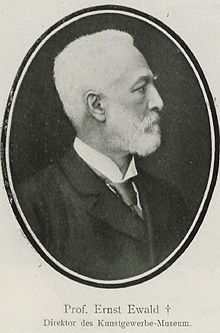
Ernst Julius Richard Ewald (Berlin, 1855 – 1921) was a German physiologist best remembered for his contributions to the study of the vestibular system. In one of his works (Ewald 1892) he articulated principles that came to be known as “Ewald’s laws,” which may be paraphrased as follows (Jongkees 1966):
- Ewald’s first law: “The axis of nystagmus parallels the anatomic axis of the semicircular canal that generated it.”
- Ewald’s second law: “In the horizontal canals, ampullopetal endolymphatic flow produces a stronger response than ampullofugal flow.”
- Ewald’s third law: “In the vertical canals (anterior, posterior), ampullofugal endolymphatic flow produces a stronger response than ampullopetal flow.”
Although Ewald did not explicitly state it, from his second and third laws one can formulate the generalization that: during rotation in the plane of two co‑planar semicircular canals, the absolute magnitude of neural signaling from the stimulated canal is greater than the absolute magnitude of signaling from the inhibited canal. This is the physiologic basis that makes it possible for head impulse testing to assess the function of individual semicircular canals (Jorns-Haderli, Straumann, Palla 2007).
References
Ewald EJR (1892) Physiologische Untersuchungen über das Endorgan des Nervus octavus. Bergmann, Wiesbaden
Jongkees LBW (1966) J. R. Ewald. Arch Otolaryngol 83: 615-9.
Jorns-Haderli M, Straumann D, Palla A (2007) Accuracy of the bedside head impulse test in detecting vestibular hypofunction. J Neurol Neurosurg Psychiatry 78: 1113-8. doi: 10.1136/jnnp.2006.109512
