By Marcello Cherchi, MD PhD
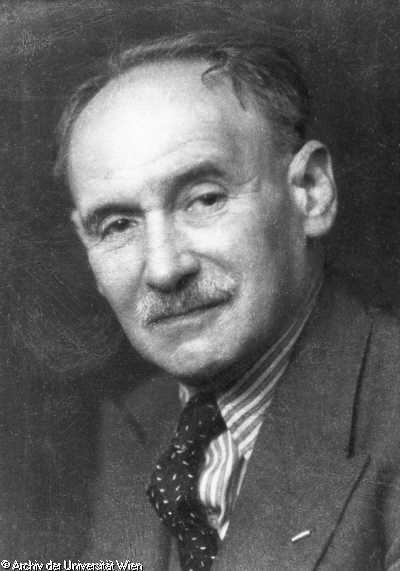
Figure: Erich Ruttin (1880-1940). From https://gedenkbuch.univie.ac.at/en/page/118/person/erich-ruttin (accessed 3/21/2026).
Dr. Erich Ruttin (born 11/13/1880 in the former Bielitz of Austrian Silesia, current Bielsko-Biala of Poland; died in 1940 in Vienna, Austria) was an otolaryngologist who was perhaps most widely recognized for his work on otologic disease, as compiled in his volume, A Clinical Study of the Serous and Purulent Diseases of the Labyrinth (Ruttin and Newhart 1914). The website hosting the University of Vienna Memorial Book for the Victims of National Socialism provides the following career timeline:
- 1900 – 1905: He studied medicine at the University of Vienna.
- 1906: He began working as assistant to Dr. Adam Politzer.
- 1908 – 1918: Worked in the Otology Clinic as an assistant to Prof. Viktor Urbantschitsch.
- 1913: Promoted to “Privatdozent” of otology.
- 1918: He ran the Department of Otology at the Hospital for Reservists in Lwiw, Ukraine.
- 1918: From this year onward he held guest lectureships at several foreign universities in Stockholm, Rotterdam, Amsterdam, Utrecht, Jerusalem and the United States.
- 1919 – 1927: He worked at the University Clinic of Otorhinolaryngology as assistant to Prof. Heinrich Neumann von Héthárs.
- 1922: He became a titular associate professor of otology.
- 1925: He was appointed director of the outpatient department for otologic diseases at the Rudolfs-Hospital in Vienna.
- 1933: He was appointed head of the outpatient department for nose and throat diseases at the Rudolfs-Hospital in Vienna.
- 1934 – 1935: Perhaps motivated by the rising anti-Semitic sentiments in Germany and Austria, he transferred to Turkey where he was appointed Professor at the University of Istanbul to establish a Clinic for Otorhinolaryngology, but health problems forced him to return to Vienna (Namal 2003).
- 1935 – 1938: He directed the outpatient department for ear-nose-throat diseases at the Rudolfs-Hospital in Vienna.
- 1938: He was dismissed from the University of Vienna under the racial laws promulgated by Adolf Hitler’s Nazionalsozialist regime.
An often overlooked aspect of Ruttin’s work was his 1909 paper (Ruttin 1909) that may have constituted the first description of vestibular neuritis (VN). Relevant paragraphs from that paper, and accompanying translation, are shown below.
|
Es musste der für eine isolierte Vestibulariserkrankung theoretisch zu fordernde Symptomenkomplex (Vestibularsymptome bei vollständigem Fehlen cochlearer Symptome) festgestellt werden. Auf der Suche nach einem derartigen Falle hielt ich es am wahrscheinlichsten, dass er in derjenigen Gruppe von Fällen zu suchen sei, die bisher mit Verdacht auf Kleinhirntumor auf interne Kliniken und Abteilungen aufgenommen werden. Tatsächlich habe ich mich in meinen Erwartungen nicht getäuscht. Im Folgenden teile ich zunächst die Krankengeschichte des Falles mit: |
It was necessary to identify the symptom complex theoretically required for an isolated vestibular disorder (vestibular symptoms in the complete absence of cochlear symptoms). In my search for such a case, I thought it most likely to be found among that group of cases admitted to internal medicine clinics and departments suspected of having a cerebellar tumor. Indeed, I was not disappointed. In what follows, I shall first present the case history: |
|
Angeblich in voller Gesundheit bis 3. I. Am 3. I. bekam er plötzlich Schwindel und fiel bei Kopfbewegungen angeblich nach der Seite, nach welcher er den Kopf hinwandte. |
This patient was reportedly in perfect health until January 3rd. On January 3rd, he suddenly experienced dizziness and, upon moving his head, reportedly fell toward the side to which he turned it. |
|
An demselben Tage Vormittag Erbrechen. Auch am nächsten Tage noch einmal Erbrechen. Stets Schwindelgefühl. Kopfschmerz gering. Patient hat keine Abnahme des Hörvermögens bemerkt. Kein Ohrensausen. |
On the morning of the same day [he experienced] vomiting. Vomiting occurred again the following day. Constant dizziness. Slight headache. The patient has noticed no decrease in hearing acuity. No tinnitus. |
|
Untersuchung: Trommelfell beiderseits normal. Flüstersprache +10 m. Weber, mehr links, Rinne beiderseits +. K. K. L. beider-seits normal. Kontinuierliche Stimmgabelreihe qualitativ und quantitativ normal auf beiden Seiten. Spontaner Nystagmus horizontalis nach links und bei Blick nach links, grossschlägig und sehr deutlich. |
Examination: Tympanic membranes normal bilaterally. Whisper test: +10 m. Weber test lateralized to the left; Rinne test positive bilaterally. Caloric testing normal bilaterally. Continuous tuning fork series qualitatively and quantitatively normal on both sides. Spontaneous horizontal nystagmus to the left—large-amplitude and very distinct—present when gazing to the left. |
|
… |
… |
|
Hinter der undurchsichtigen Brille (Bárány- Abels) beobachtet hat der Nystagmus nach links eine geringe rotatorische Komponente. Diese rotatorische Komponente wird bei Neigung des Kopfes nach links verstärkt, bei Neigung des Kopfes nach rechts abgeschwächt. Bei Neigung des Kopfes nach vorn und rückwärts keine deutliche Beeinflussung des Nystagmus. |
Observed behind opaque goggles (Bárány-Abels), the leftward nystagmus exhibits a slight rotatory component. This rotatory component is accentuated when the head is tilted to the left and attenuated when the head is tilted to the right. Tilting the head forward or backward has no significant effect on the nystagmus. |
|
… |
… |
|
Beim Gehen und Stehen mit geschlossenen Augen Schwanken mehr nach rechts. Neurologischer Befund und interner Befund absolut negativ. |
When walking and standing with eyes closed, there was increased swaying to the right. The neurological and general medical findings were entirely negative. |
|
Ich habe nun den Patienten in Zeiträumen von 3 bis 5 Tagen genau untersucht. Dabei konnte ich die allmähliche Abnahme des Nystagmus konstatieren konform mit der Besserung des subjektiven Schwindelgefühls. |
I have now examined the patient thoroughly at intervals of 3 to 5 days. In doing so, I was able to observe a gradual decrease in the nystagmus, consistent with the improvement in the subjective sensation of dizziness. |
|
… |
… |
|
Am 27. Januar 08 konnte ich den Patienten bereits als vollständig geheilt in der Sitzung der österr. otolog. Gesellschaft demonstrieren. Auch die genaueste otologische Untersuchung war nicht mehr in Stande eine Erkrankung des Ohres nachzuweisen. Auch der interne und neurologische Befund war vollständig negativ. |
On January 27, 1908, I was already able to present the patient as completely cured at a meeting of the Austrian Otological Society. Even the most meticulous otological examination was no longer able to detect any pathology of the ear. The internal medical and neurological findings were likewise entirely negative. |
|
Das wichtigste an diesem Falle ist der Nachweis, dass es reine Erkrankungen des Ramus vestibularis gibt und dass diese rückbildungs-fähig sein können. An welcher Stelle die Erkrankung sitzt, lässt sich ohne pathologisch -anatomischen Befund freilich nicht sicher feststellen, am ehesten liesse sich im vorliegenden Falle eine Neuritis des Vestibular-nervenstammes vermuten. |
The most significant aspect of this case is the demonstration that pure disorders of the vestibular branch exist and that these can be reversible. While the precise localization of the disorder cannot, of course, be definitively established without a pathological-anatomical examination, a neuritis of the main vestibular nerve trunk would be the most plausible hypothesis in the present case. |
In summary, the salient features of the case described by Ruttin (Ruttin 1909) were those of a patient with abrupt onset, continuous disequilibrium who, on examination exhibited spontaneous unidirectional nystagmus that was horizontal (with a modest torsional component) that increased on lateral gaze in the direction of the fast phase of the nystagmus (obeying Alexander’s law); over time the symptoms and the nystagmus gradually decreased, and eventually resolved. Rutin explicitly suggests that “a neuritis of the main vestibular nerve trunk would be the most plausible hypothesis in the present case.” This description is compatible with a contemporary understanding of vestibular neuritis (VN), and may be the first description thereof, even earlier than those of Margaret Ruth Dix and Charles Skinner Hallpike in 1952 (Dix and Hallpike 1952), and of Carl Olof Siggesson Nylén (1882 – 1978) in 1924 (Nylén 1924).
References
Dix MR, Hallpike CS (1952) The pathology symptomatology and diagnosis of certain common disorders of the vestibular system. Proc R Soc Med 45: 341-54.
Namal A (2003) Die kurze Tätigkeit des österreichischen Hals-Nasen-Ohren-Spezialisten Prof. Dr. Erich Ruttin an der Universität Istanbul in den Jahren 1934 und 1935 [The short working period of the Austrian ear, nose and throat specialist Professor Erich Ruttin at Istanbul University in 1934 and 1935]. Wiener Klinische Wochenschrift 115: 432-437. doi: 10.1007/BF03040437
Nylén CO (1924) Some Cases of Ocular Nystagmus Due to Certain Positions of the Head. Acta Oto-Laryngologica 6: 106-137. doi: 10.3109/00016482409123851
Ruttin E (1909) Zur differential diagnose der Laybrinth- und Hörnerverkrankungen [On the differential diagnosis of labyrinthine and hearing diseases]. Zeitschrift für Ohrenheilkunde [Journal of Otology] 57: 327-331.
Ruttin E, Newhart H (1914) A clinical study of the serous and purulent diseases of the labyrinth. Rebman company, New York
