By Marcello Cherchi, MD PhD
For patients
Electrical injuries, whether or not related to lightning, can cause hearing problems (which are often permanent) and balance problems (which are usually temporary). If your doctor suspects that such symptoms are related to exposure to electricity, then they may check certain imaging studies of the head, hearing tests and balance tests. Some types of hearing loss may require surgery.
For clinicians
Overview
The determinants of damage from an electrical exposure include several electrical parameters (voltage, amperage, resistance, type of circuit, duration) and biological parameters (pathway of current through the body, electrical resistance of individual tissues). Direct current injuries behave differently from alternating current injuries. Lightning electrical injuries involve much higher voltage and current but usually shorter duration of exposure compared to non-lightning electrical injuries. Epidemiologically, non-lightning electrical injuries have a male preponderance that is slight in childhood and overwhelming in adulthood. Lightning injuries often cause unilateral or bilateral tympanic membrane ruptures with commensurate conductive hearing loss. Sensorineural hearing loss (sometimes asymmetrical) can occur in both lightning and non-lightning electrical injuries. Tinnitus is also common after an electrical injury. Disequilibrium often occurs after an electrical injury and is usually transient. Evaluation and management of audiologic and vestibular symptoms may involve an audiologist, neuro-otologist and otoneurologist. Audiometry may show hearing loss in any pattern (symmetrical or asymmetrical; sensorineural, conductive or mixed). Vestibular testing may show abnormalities in cervical vestibular evoked myogenic potentials and caloric testing. Tympanic membrane ruptures may heal spontaneously, but often require surgical repair. Sensorineural hearing loss is usually permanent, though spontaneous improvement has been reported; some cases of permanent sensorineural hearing loss have been managed with cochlear implantation. There are no published studies regarding treatment for disequilibrium following electrical injuries, perhaps because that symptom is usually transient.
Introduction
The literature about audiologic and vestibular effects of electrical injuries is scant.
History
Some literature cites Dr. George Wilks (1840 – 1919) as having described the first case of a lightning injury causing hearing loss; this was reported in the proceedings of the Clinical Society of London published by the Lancet in 1879 (volume 2, issue 2931, pages 655-656) (Wilks 1879). The actual text recounts the case of a farmer struck by lightning and simply states, “He was also deaf.”
Epidemiology
Regarding non-lightning electrical injuries, Browne and Gaasch (Browne and Gaasch 1992) note that:
“The age of distribution of electrical accidents is bimodal. There is a high incidence among children younger [than] the age of 6 years. Most injuries occurred as a result of oral contact with electric cords or electric sockets. Many accidents befall older children who touch wires while climbing trees or utility poles. The incidence decreases through the teenaged years and then resurges as adults enter the workforce” (Browne and Gaasch 1992).
Modayil and colleagues (Modayil et al. 2014) add that:
“Approximately 80% of all electric current injuries occur in adults, mostly in the workplace. More than 50% of these occupational electrocutions result from power line contact and 25% result from using electric tools. Most of the fatalities from lightning strikes occur amongst young people who are engaged in outdoor activities” (Modayil et al. 2014).
Regarding gender distribution, Browne and Gaasch (Browne and Gaasch 1992) state:
“The male to female ratio in childhood electrical injury ranges from roughly even to 2:1 male preponderance. Among adults, an overwhelming 93% of the victims are men, which reflects the male dominated construction and electrical industries” (Browne and Gaasch 1992).
Regarding lightning injuries, Cooper states that:
“Lightning injuries occur most commonly during the summer and fall months, during the early afternoon and evening hours when people are out of doors, and more often in rural areas than in urban. In the United States, such injuries are more common in the South than in the North, and along the east coast; strikes are rare on the west coast” (Cooper 1984).
In the United States there has been an overall trend of reduced frequency (as a percentage of the population per year) of fatal lightning strikes (Duclos and Sanderson 1990). Ritenour and colleagues speculate, “A likely explanation for this finding is a decrease in the number of individuals involved in farming, and an increase in the proportion of the population living in an urban setting” (Ritenour et al. 2008). Ritenour and colleagues cite an overall mortality rate from lightning strikes of 10% – 30% (Ritenour et al. 2008).
Genetics
As of this writing, no publications have reported a genetic vulnerability to audiologic or vestibular symptoms following electrical injury.
Pathophysiological mechanism of disease
Cooper (Cooper 1984) states that there are six main determinants of the nature and severity of electrical injuries:
- Voltage of current
- Amperage of current
- Resistance of tissues
- Type of circuit (whether direct or alternating current)
- Duration of contact
- Pathway of current
Ohm’s law (I=V/R) states that electrical current (I) is directly proportional to voltage (V) and inversely proportional to the resistance (R) of the conductor. In an organism, “Factors that determine the degree of [electrical] injury include the magnitude of energy delivered, resistance encountered, type of current, current pathway, and duration of contact” (Modayil et al. 2014).
In a direct current (DC) electrical injury:
“Electron flow moves in the same direction at all times between a positive and negative terminal” and “because the direction of the electrical current remains constant in DC, it typically produces a strong jolt that causes a single musculoskeletal event when a subject comes into contact with the electrical charge” (Wuesthoff et al. 2017).
A lightning strike is a form of DC electrical injury. Non-lightning examples of DC electrical injury include batteries, car and railway electrical systems.
In contrast, in an alternating current (AC) electrical injury:
“The electron flow reverses or alternates (approximately 60 times per second in North America or 50 times per second in Europe) on a cyclical basis… AC is typically generated from power plants, and its voltage is modulated by transformers; ultimately it is made available through electrical outlets… The cyclical nature of AC… causes the subject to experience tetany, which renders them unable to let go of the electrical source” (Wuesthoff et al. 2017).
A person is vulnerable to tetany induced by an alternating electrical current “because skeletal muscle is susceptible to current frequencies between 15 and 150 cps” (cycles per second) (Browne and Gaasch 1992).
Much of the literature distinguishes lightning-related injuries from non-lightning-related injuries. This is because of the difference in the power of the injury; citing Uman and colleagues (Uman and Krider 1989) and Golde (Golde and Lee 1976), Cherington states that in lightning-related injuries, “The voltages and amperes are mammoth (1 million or more volts; 30,000 or more amperes)” (Cherington 1995), though the literature provides range of estimates for the various electrical parameters of lightning strikes:
- Voltage:
- “One million or more volts” (Cherington 1995).
- “20 million volts” (Gluncic et al. 2001).
- Current:
- “30,000 or more amperes” (Cherington 1995).
- “30,000 – 50,000 A” (Ritenour et al. 2008).
- “40,000 to 50,000” amperes (Turan et al. 2015).
- “The average bolt carries 10,000 to 20,0000 amperes” with a range of “100 to 110,000 amperes” (Wright and Silk 1974).
- Duration:
- “3 milliseconds” (Wright and Silk 1974).
- “Approximately 10 – 100 ms” (Ritenour et al. 2008).
- Resulting temperature:
- “20,000 ˚ C” (Turan et al. 2015).
- “Temperature exceeding 20,000 ˚ C” (Gluncic et al. 2001).
- “Approximately 30,000 K” (Ritenour et al. 2008).
Lightning can cause injuries through four mechanisms, which Cooper (Cooper 1984) explains as follows:
“Direct strike is self-explanatory. Side flash occurs when the current splashes from its primary conductor, such as a tree or another person, to the victim. Ground current occurs when lightning hits the ground close to a victim. If the victim exhibits a potential difference in his body (that is, has one foot closer to the strike than the other), a current may be set up through the patient’s body. Owing to the explosive/implosive effect of lightning as it passes through the air, victims may exhibit blunt injuries similar to those seen in an individual who has been in an explosion or been thrown” (Cooper 1984).
Despite the magnitude of power transmitted by lightning:
“Following technical [non-lightning] electrical trauma, patients can have the fate of death or severe neurologic damage that is as devastating as a lightning injury, even though the magnitude of the voltage and current is much smaller than that delivered by a lightning bolt. There is one parameter that is often greater in technical electrical trauma than in lightning strikes. That parameter, which is responsible for some of the most damaging effects on human tissues, is the longer duration of current flow. Whereas the duration of a lightning strike is a fraction of a second, the patient injured by technical electricity may be in contact with electrical current for several seconds or even minutes” (Cherington 1995).
A current of electrons passing through tissues meets resistance and will generate heat, called the Joule effect (Browne and Gaasch 1992; Wuesthoff et al. 2017), resulting in thermal damage. Citing work by Lee and colleagues (Lee et al. 1993; Lee et al. 1988), Cherington additionally notes that non-thermal tissue damage may also result from cellular “membrane electroporation [which] is the electrically driven formation of aqueous pores in bilayer lipid membranes” which can lead to membrane rupture (Cherington 1995). See also Ritenour and colleagues (Ritenour et al. 2008).
Modayil and colleagues undertook a literature review and reported that:
“The commonest acoustic insult after lightning injury is conductive hearing loss secondary to tympanic membrane rupture and the most frequent vestibular symptom is transient vertigo. Electrical current injuries predominantly cause pure sensorineural hearing loss and may significantly increase a patient’s lifetime risk of vertigo” (Modayil et al. 2014).
Modayil and colleagues summarize that, “Theories for cochleovestibular damage in electrical injury include disruption of inner ear anatomy, electrical conductance, hypoxia, vascular effects and stress response hypothesis” (Modayil et al. 2014).
Theoretical considerations
Choi and colleagues comment that:
“Electrical injuries are the result of converting electrical energy into heat energy. The heat generated by the passage of electrical current is directly proportional to the resistance of the transversed tissues. The susceptibility of individual tissues to electrical current does not, however, correlate with the amount of heat generated by current passage. For example, the nervous system and blood vessels have low resistance; however it is the clinical impression of many that nerve tissue and blood vessels are inherently more sensitive to electrical injury than are other tissues with higher resistances. Electrical current, especially of low-voltage, tends to preferentially course along neurovascular bundles. Both early and delayed deep ischemic necrosis may occur along the distribution of neurovascular bundles as the result of vascular thrombosis induced by the passage of electrical current. Because electricity has a diversity of effects on biologic tissues, the nature and findings of electrical injuries are very complex. Electrical energy affects the permeability of cell membranes, and increased temperature causes denaturation of tissue proteins. When a person contacts with high electrical energy that arcs, this often causes a blunt mechanical injury with a strong thermoblastic effect” (Choi et al. 2010).
The fact that different body tissues are characterized by different degrees of electrical resistance (Browne and Gaasch 1992) partly accounts for the differential effects of an electrical injury. As Cooper (Cooper 1984) explains:
“Resistance of the tissues of the body to the flow of electrical current is measured in ohms and varies with the type of tissue involved. The nerves, designed to carry electrical impulses, have the least resistance. They easily transmit current, as do the blood vessels and muscles, both containing excellent electrolyte media. The most resistant tissues are tendons and fat, which tend to melt and coagulate as the current passes through them, and bone, which tends to offer so much resistance that it does not conduct the current but instead heats up and causes periosteal and surrounding deep muscle damage” (Cooper 1984).
Clinical presentation
Acutely, victims of electrical injuries are often managed in trauma centers, burn units or (if in coma) intensive care units (Cooper 1984). Audiologic and vestibular symptoms, even if present early in the course of the illness, understandably receive lower priority than cardiovascular support.
Grell and colleagues (Grell et al. 2012) studied a series of 3133 survivors of electrical accidents in Denmark from 1868 – 2008 and reported that at 5 – 9 years after injury the relative risk of subsequently being diagnosed with “vertigo” was 2.13 (95% confidence interval 1.06 – 3.81) compared to the general population. Grell and colleagues stated that this finding was similar to that of a study in the United States (Hooshmand et al. 1989).
Modayil and colleagues report that:
“Electric current injury produces more central damage than peripheral. In contrast to lightning strikes, it predominantly causes a pure sensorineural hearing loss with regard to audiovestibular damage” (Modayil et al. 2014).
Drawing on a database of workplace injuries, Wuesthoff and colleagues (Wuesthoff et al. 2017) report on 42 patients who had sustained non-lightning electrical injuries. They provide the data in Table 1 regarding symptoms and signs in these patients.
|
Symptoms |
Further characteristics |
Number of patients |
Percentage of patients |
|
Dizziness | |||
|
Presentation/onset |
Intermittent |
26 |
62 |
|
Constant |
5 |
12 | |
|
Positional |
9 |
21 | |
|
Drop attacks |
1 |
2 | |
|
Indeterminate |
1 |
2 | |
|
Duration |
Seconds |
23 |
55 |
|
Minutes to hours |
12 |
29 | |
|
A day or more |
6 |
14 | |
|
Indeterminate |
1 |
2 | |
|
Feeling |
Rotatory; “true vertigo” |
18 |
43 |
|
Lightheadedness |
21 |
50 | |
|
Indeterminate |
3 |
7 | |
|
Total (dizziness) |
42 |
100 | |
|
Tinnitus | |||
|
Constant ringing |
9 |
21 | |
|
Intermittent ringing |
9 |
21 | |
|
Constant or intermittent, pulsatile |
1 |
2 | |
|
Indeterminate |
12 | ||
|
Total (tinnitus) |
20 |
47 | |
|
Imbalance |
Total (imbalance) |
15 |
37 |
|
Aural fullness |
Total (aural fullness) |
1 |
2 |
|
New onset hearing loss |
Sensorineural |
9 |
21 |
|
Conductive |
0 |
0 | |
|
Mixed |
1 |
2 | |
|
Total (new onset hearing loss) |
10 |
24 | |
|
Facial palsy |
Total (facial palsy) |
0 |
0 |
|
Otalgia |
Total (otalgia) |
1 |
2 |
Table : Symptoms, signs and clinical findings in 42 patients who suffered non-lightning electrical injuries. From Wuesthoff et al (Wuesthoff et al. 2017).
Physical examination
In lightning strike survivors, otoscopy may identify tympanic membrane rupture (Bozan et al. 2016); Weber’s and Rinne’s test may identify conductive hearing loss.
Gluncic and colleagues described 12 victims of lightning strikes who suffered tympanic membrane ruptures and stated that, “In all of these 12 patients, tympanic membrane perforation involved the pars tensa, and was unilateral in three and bilateral in nine patients” (Gluncic et al. 2001).
Turan and colleagues (Turan et al. 2015) described the case of a lightning injury victim with asymmetrical lesions. Figure 1 shows otoscopic findings in which the tympanic membrane was ruptured in the left ear, and intact in the right ear.
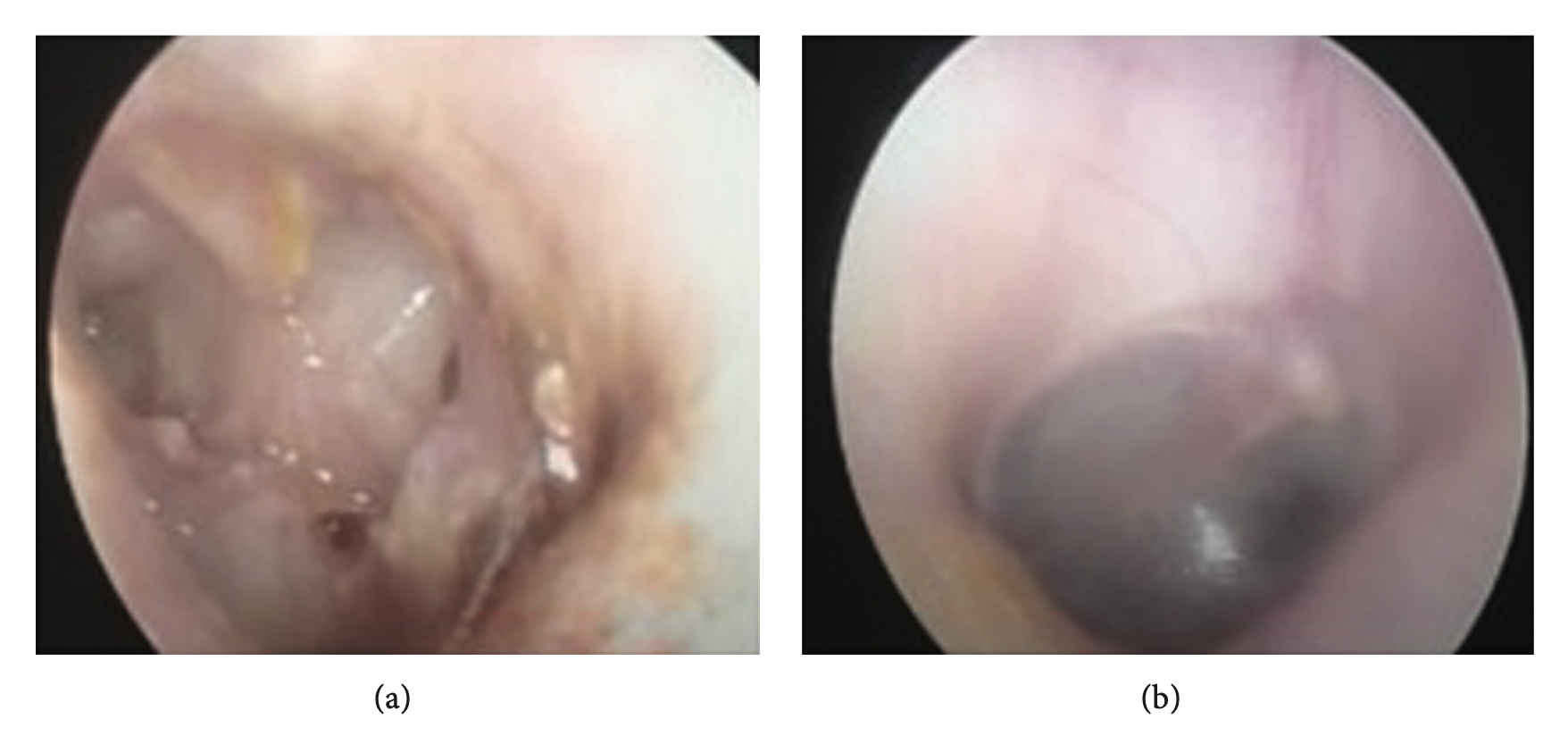
Figure : Otoscopy of a lightning strike victim showing asymmetrical effects. Panel (a) shows a perforated left tympanic membrane. Panel (b) shows an intact lright tympanic membrane. From Turan et al (Turan et al. 2015).
Ocular motor examination
Published literature does not systematically comment on ocular motor examination of patients with electrical injuries.
Testing: auditory
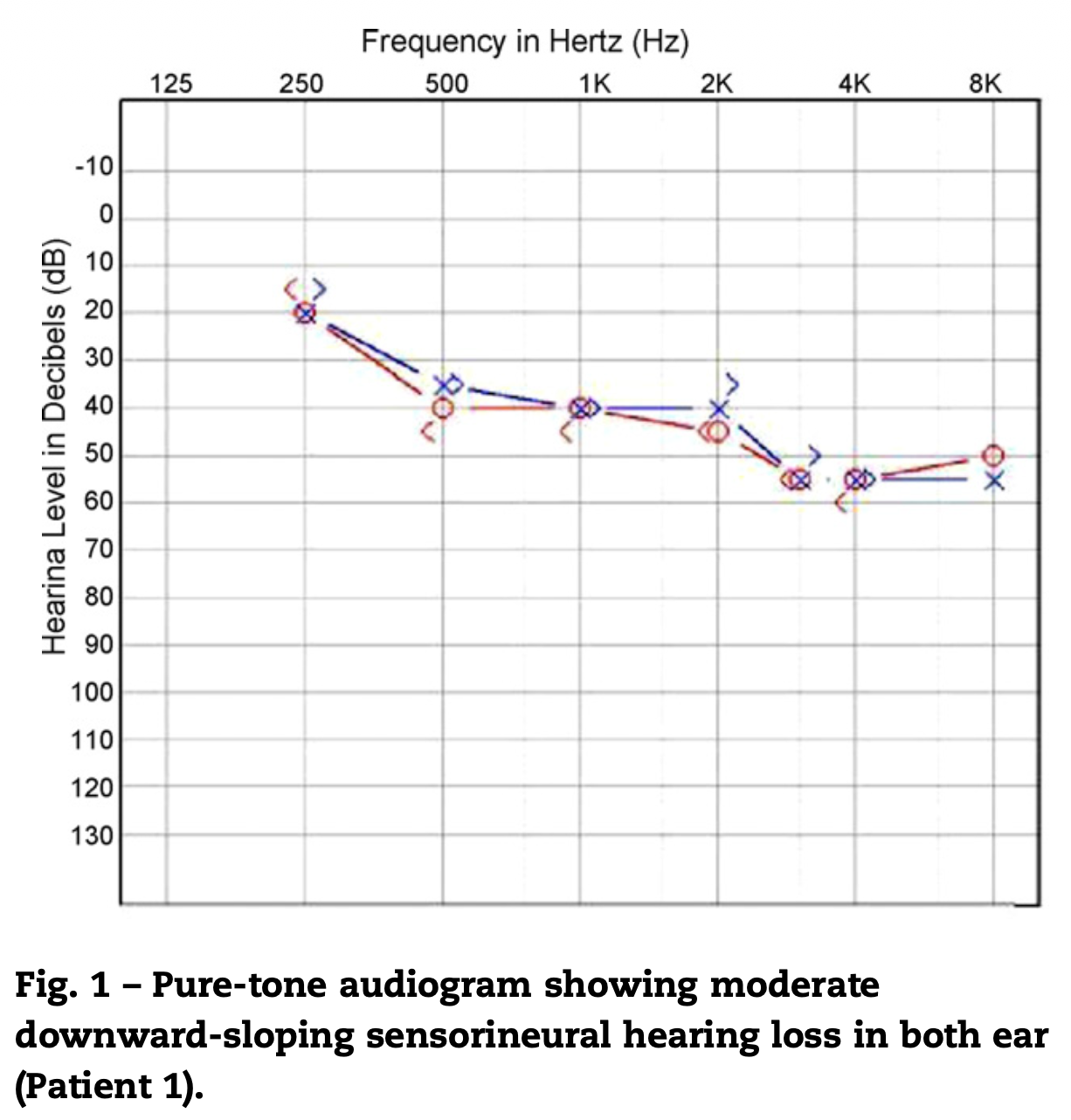
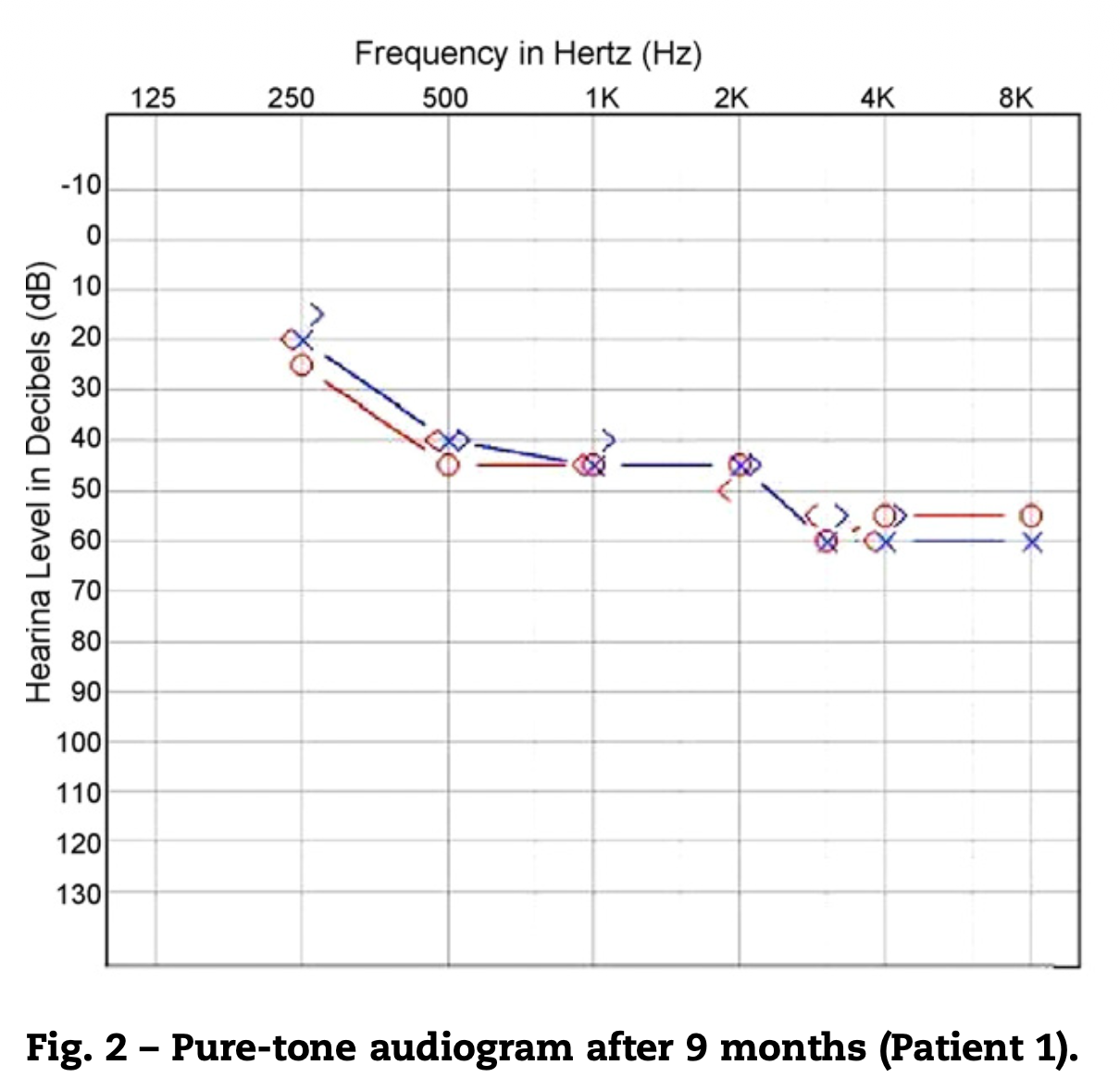
Choi and colleagues (Choi et al. 2010) reported a series of three patients who had suffered non-lightning electrical injuries. Patient #1 had approximately symmetrical, high greater than middle frequency sensorineural hearing loss that was stable at 9 months after injury, as shown in the Figure below.
|
|
Table : Audiograms from a patient who had sustained a non-lightning electrical current injury. The first audiogram was performed shortly after injury; the second 9 months later. These show stable, approximately symmetrical, high greater than middle frequency sensorineural hearing loss. From Choi et al (Choi et al. 2010).
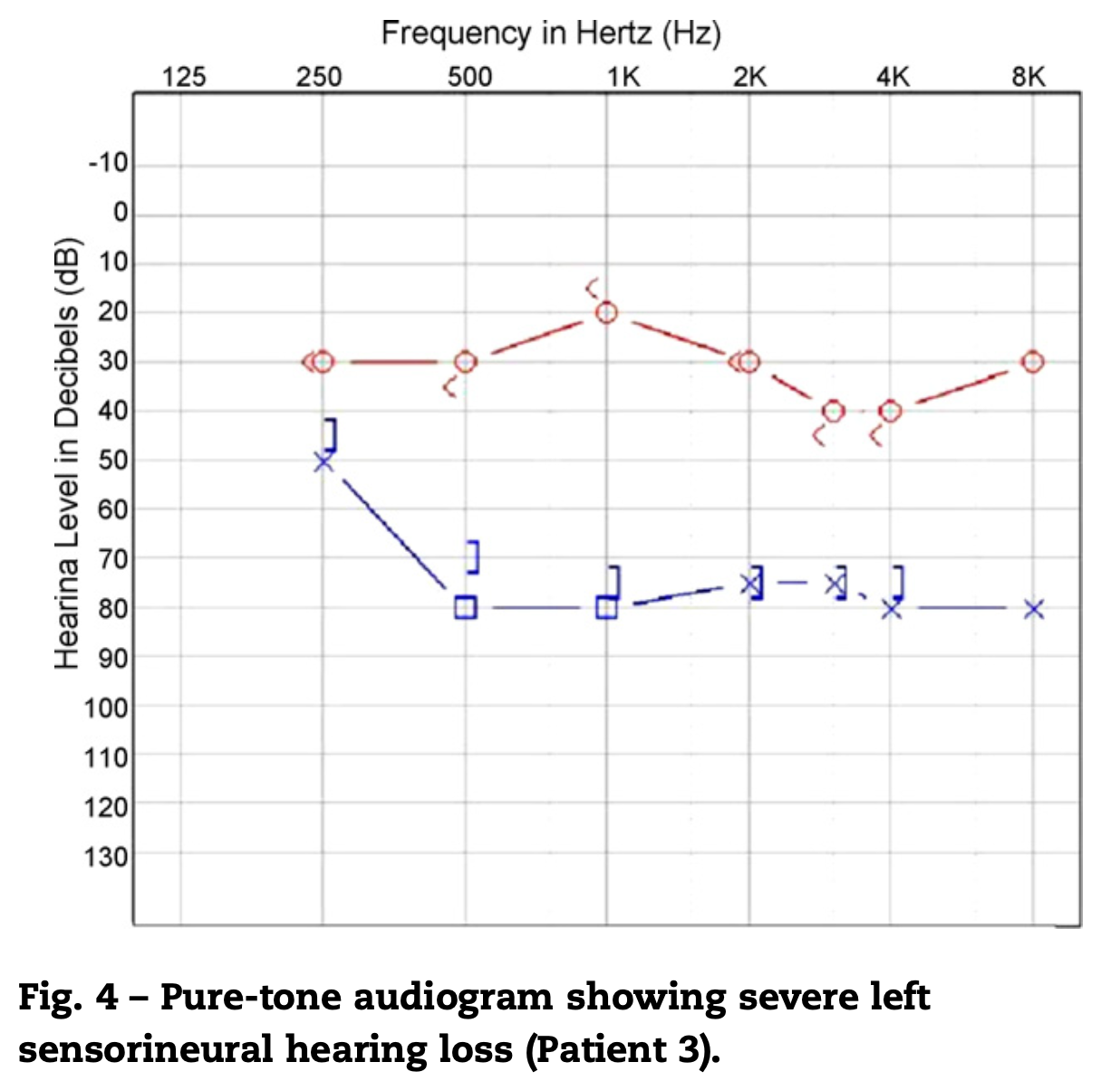
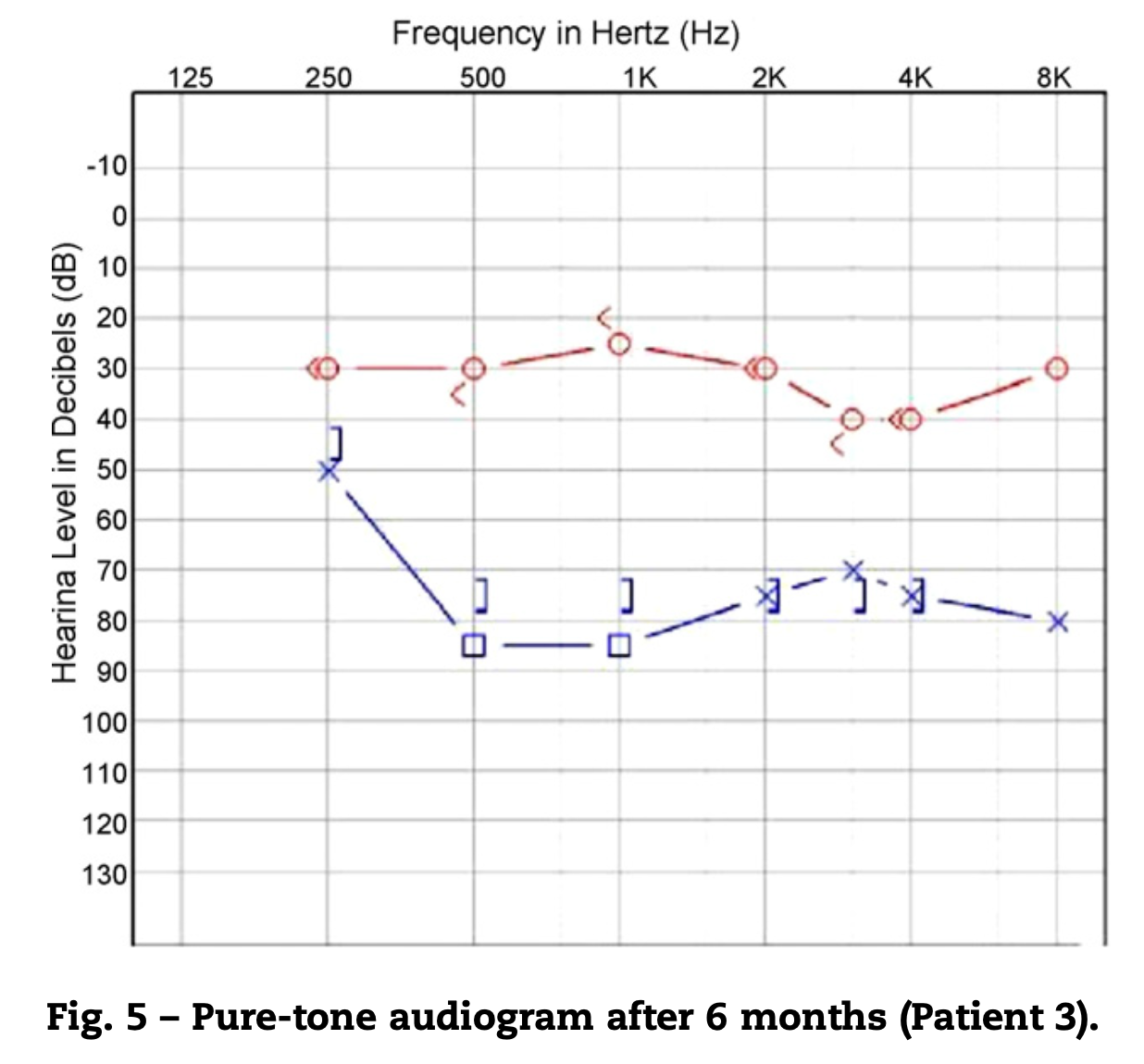
Patient #3 had asymmetrical sensorineural hearing loss that was stable at 6 months after injury, as shown in the Figure below.
|
|
Table : Audiograms from a patient who had sustained a non-lightning electrical current injury. The first audiogram was performed shortly after injury; the second 6 months later. The audiograms show stable, left greater than right, predominantly sensorineural hearing loss. From Choi et al (Choi et al. 2010).
Asymmetrical sensorineural hearing loss has been reported in other cases of lightning injury (Turan et al. 2015) and non-lightning electrical injury (Kataria 2025).
Testing: vestibular
In their study of 42 patients who had sustained non-lightning electrical injuries, Wuesthoff and colleagues reported that 31% exhibited “caloric abnormalities” (Wuesthoff et al. 2017), without further specification. An example of unilateral weakness on caloric testing from Choi and colleagues (Choi et al. 2010) is shown in Figure 1 below.
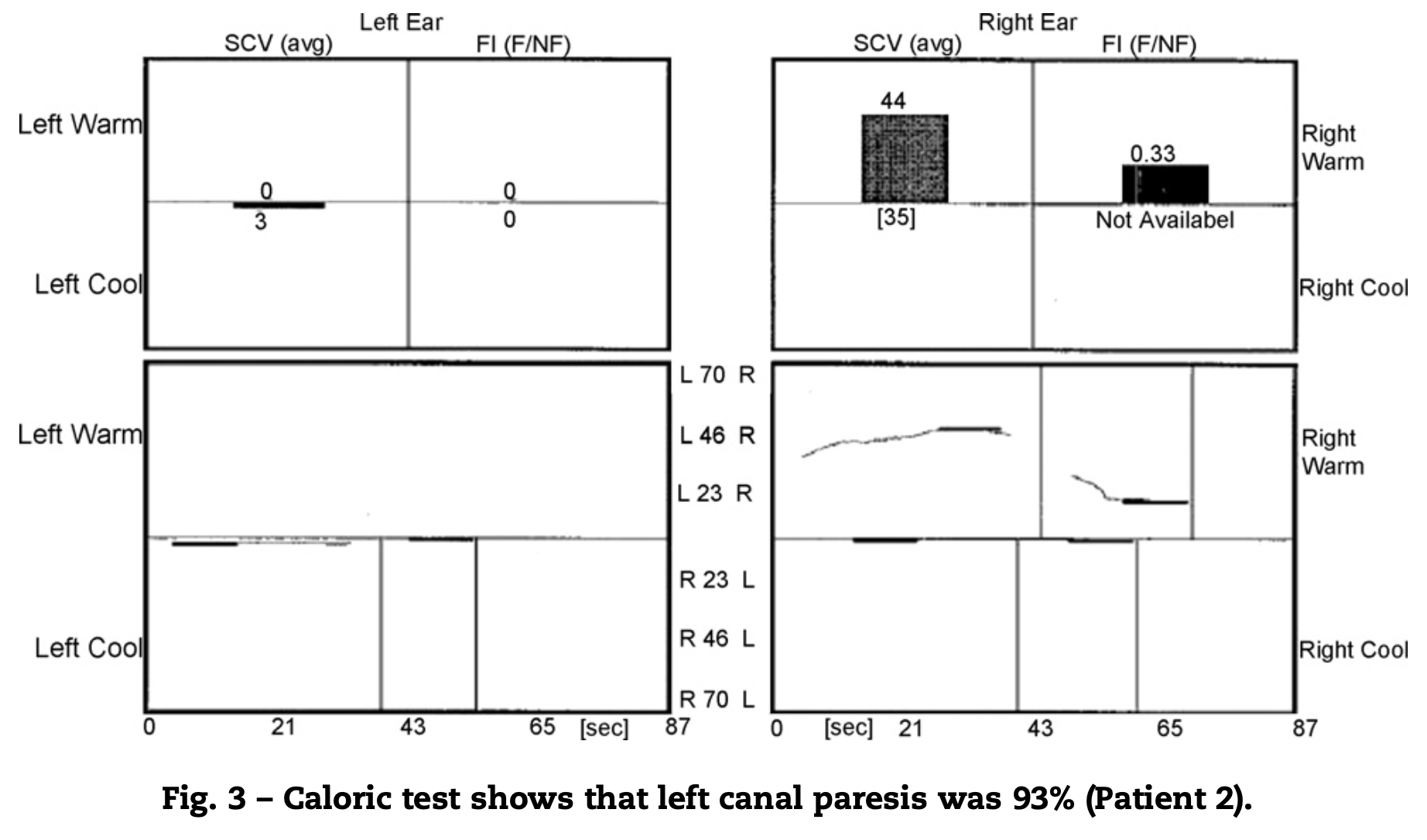
Figure : Caloric testing from a patient who had sustained a non-lightning electrical injury. This study identified a 93% left unilateral caloric weakness. From Choi et al (Choi et al. 2010).
In their study of 42 patients who had sustained non-lightning electrical injuries, Wuesthoff and colleagues reported that 17% exhibited “abnormalities” in cervical vestibular evoked myogenic potentials (cVEMP), without further description.
Imaging
Cherington states that:
“Several kinds of cerebral lesions have been confirmed by magnetic resonance imaging (MRI) or computed tomography (CT) scans. These include infarction, hematoma, and edema” (Cherington 1995).
Histopathology
Cherington states that, “The morphologic changes in the brains of lightning victims include hemorrhages, chromatolysis of pyramidal cells and other neurons, and glial proliferation” (Cherington 1995).
Youngs and colleagues reported the case of a lightning strike victim who developed asymmetrical sensorineural hearing loss following the injury. The temporal bone study showed that:
“The organ of Corti was absent in all turns. In some sections Reissner’s membrane had collapsed onto the basilar membrane. There was degeneration of the stria vascularis and loss of spiral ganglion cells. There was foamy vacuolation of the cupula of the lateral semicircular canal” (Youngs et al. 1988).
Differential diagnosis
While there is not an extensive differential diagnosis of electrical injury in itself, the clinician should keep in mind that the majority of electrical injury victims also sustain head trauma (typically from a fall following the electrical injury), which can introduce additional injuries, complicating evaluation and management.
Management
The literature review by Modayil and colleagues concluded that, “No management protocol for audiovestibular electrical injuries was found” (Modayil et al. 2014). Given the rather limited understanding of the pathophysiology, practical considerations for patients who have suffered an electrical injury include:
- Otologic examination and neurotological/otoneurological examination.
- If there are auditory symptoms, then:
- At minimum, consider checking audiometry with tympanometry.
- If the tympanic membranes are intact, and if audiometry shows no conductive hearing loss, then consider otoacoustic emissions (OAE) and possibly auditory brainstem evoked responses (ABR).
- If there are vestibular symptoms, then:
- At minimum, consider checking video head impulse testing (vHIT) and rotatory chair testing (RCT), which do not depend on middle ear integrity. Modayil and colleagues additionally suggest checking computerized dynamic posturography (CDP) (Modayil et al. 2014).
- If the tympanic membranes are intact, then videonystagmography (VNG) with caloric testing is appropriate.
- If there is no conductive hearing loss, then consider cervical vestibular evoked myogenic potentials (cVEMP) and ocular vestibular evoked myogenic potentials (oVEMP).
- There are no published studies regarding treatment for disequilibrium following electrical injuries, perhaps because that symptom is usually transient.
- If otologic examination reveals tympanic membrane rupture, or if audiometry identifies conductive hearing loss, then referral to a neuro-otologist is appropriate.
- Temporal bone CT without contrast may help identify an ossicular chain dislocation.
- “Myringoplasty for tympanic membrane perforations should be delayed for 6 – 12 months because of the possibility of spontaneous healing” (Modayil et al. 2014).
- If audiometry identifies sensorineural hearing loss, then referral to audiology is appropriate.
- If a patient complains of vestibular symptoms, then referral to vestibular rehabilitation therapy (VRT) is reasonable. The specific therapy exercises may depend on whether workup identifies a vestibular weakness.
- If otoscopy identifies hemotympanum, or if there is evidence of cerebrospinal fluid otorrhea, then a temporal bone CT without contrast is reasonable in order to evaluate for temporal bone fracture.
Prognosis
Wuesthoff and colleagues (Wuesthoff et al. 2017), citing Mounier-Kuhn and colleagues (Mounier-Kuhn et al. 1963), states that sensorineural hearing loss associated with electrical injuries is generally permanent. There are reports of some degree of spontaneous improvement in sensorineural hearing loss even after lightning strikes (Turan et al. 2015). There are also reports of successfully managing sensorineural hearing loss with cochlear implantation (Myung et al. 2012).
Additional notes
Cooper (Cooper 1984) comments that:
“Almost all of these cases [of non-lightning electrical injuries] eventually involve litigation, either as workers’ compensation cases or because the injured parties think that the electric company should have had more protective insulation, higher fencing, or other security measures to keep them from injuring themselves” (Cooper 1984).
This additional medico-legal dimension of potential secondary gain complicates evaluation as there may be marked discrepancies between subjectively reported symptoms and objectively observed findings on physical examination and/or instrumented tests and imaging.
References
Bozan N, Kiroglu AF, Ari M, Turan M, Cankaya H (2016) Tympanic Membrane Perforation Caused by Thunderbolt Strike. J Craniofac Surg 27: e723-e724. doi: 10.1097/SCS.0000000000003036
Browne BJ, Gaasch WR (1992) Electrical injuries and lightning. Emerg Med Clin North Am 10: 211-29.
Cherington M (1995) Central nervous system complications of lightning and electrical injuries. Semin Neurol 15: 233-40. doi: 10.1055/s-2008-1041028
Choi DJ, Kim BG, Park IS, Kim YB, Kim TH, Heo CY (2010) Three cases of inner ear damage after electrical burns. Burns 36: e83-6. doi: 10.1016/j.burns.2009.10.015
Cooper MA (1984) Electrical and Lightning Injuries. Emergency Medicine Clinics of North America 2: 489-501. doi: https://doi.org/10.1016/S0733-8627(20)30869-5
Duclos PJ, Sanderson LM (1990) An epidemiological description of lightning-related deaths in the United States. Int J Epidemiol 19: 673-9. doi: 10.1093/ije/19.3.673
Gluncic I, Roje Z, Gluncic V, Poljak K (2001) Ear injuries caused by lightning: report of 18 cases. J Laryngol Otol 115: 4-8. doi: 10.1258/0022215011906858
Golde RH, Lee WR (1976) Death by lightning. Proceedings of the Institution of Electrical Engineers 123: 1163-1180. doi: 10.1049/piee.1976.0210
Grell K, Meersohn A, Schuz J, Johansen C (2012) Risk of neurological diseases among survivors of electric shocks: a nationwide cohort study, Denmark, 1968-2008. Bioelectromagnetics 33: 459-65. doi: 10.1002/bem.21705
Hooshmand H, Radfar F, Beckner E (1989) The neurophysiological aspects of electrical injuries. Clin Electroencephalogr 20: 111-20. doi: 10.1177/155005948902000208
Kataria A (2025) Sudden Sensorineural Hearing Loss Following Electric Shock: A Case Report with Literature Review. Iran J Otorhinolaryngol 37: 47-50. doi: 10.22038/ijorl.2024.77019.3579
Lee RC, Canaday DJ, Hammer SM (1993) Transient and stable ionic permeabilization of isolated skeletal muscle cells after electrical shock. J Burn Care Rehabil 14: 528-40. doi: 10.1097/00004630-199309000-00007
Lee RC, Gaylor DC, Bhatt D, Israel DA (1988) Role of cell membrane rupture in the pathogenesis of electrical trauma. J Surg Res 44: 709-19. doi: 10.1016/0022-4804(88)90105-9
Modayil PC, Lloyd GW, Mallik A, Bowdler DA (2014) Inner ear damage following electric current and lightning injury: a literature review. Eur Arch Otorhinolaryngol 271: 855-61. doi: 10.1007/s00405-013-2544-7
Mounier-Kuhn P, Lafon H, Lewi M (1963) [Clinical Study of Lesions of the Auditory Apparatus Caused by Electricity]. Rev Otoneuroophtalmol 35: 165-76.
Myung NS, Lee IW, Goh EK, Kong SK (2012) Cochlear implantation for severe sensorineural hearing loss caused by lightning. Am J Otolaryngol 33: 767-9. doi: 10.1016/j.amjoto.2012.06.007
Ritenour AE, Morton MJ, McManus JG, Barillo DJ, Cancio LC (2008) Lightning injury: a review. Burns 34: 585-94. doi: 10.1016/j.burns.2007.11.006
Turan M, Kalkan F, Bozan N, Ozcalimli I, Zeki Erdem M, Yalinkilic A, Garca MF (2015) Isolated Sensorineural Hearing Loss as a Sequela after Lightning Strike. Case Rep Otolaryngol 2015: 738416. doi: 10.1155/2015/738416
Uman MA, Krider EP (1989) Natural and artificially initiated lightning. Science 246: 457-64. doi: 10.1126/science.246.4929.457
Wilks G (1879) A case of lightning stroke. Lancet 2: 655-656.
Wright JW, Jr., Silk KL (1974) Acoustic and vestibular defects in lightning survivors. Laryngoscope 84: 1378-87. doi: 10.1288/00005537-197408000-00013
Wuesthoff C, Ilan O, Rutka JA (2017) Neurotological findings after electrical injury at the workplace. Laryngoscope 127: 2126-2131. doi: 10.1002/lary.26453
Youngs R, Deck J, Kwok P, Hawke M (1988) Severe sensorineural hearing loss caused by lightning. A temporal bone case report. Arch Otolaryngol Head Neck Surg 114: 1184-7. doi: 10.1001/archotol.1988.01860220118037
